Rules of the Road

I hope you will find my blog interesting and inspiring. To help make your visit more profitable, please observe these Rules of the Road.

1. I am not a rabbi. If you have a question regarding halachah (Jewish law) please consult a rabbi.

2. Please do not visit on Shabbat or Jewish holidays.

3. Feel free to comment on any post. Please be respectful when commenting. All comments will be reviewed.

4. Additional resources are listed at the end of each post for readers who would like more information on the topic.

5. Please explore the other pages of this blog to learn about the basics of living a Jewish life and to find out more about me and my projects.

6. You may contact me via email at welshabba@gmail.com or leave a text or voice message at 267-225-8573.

Showing posts with label Shavuot. Show all posts

Monday, May 18, 2020

More Than Cheesecake! The Meaning of Shavuot

A few years ago in a conversation with a local rabbi I got a sad reality check. "Shavuot is probably the least observed of all Jewish holidays. I was shocked! But the more we talked, the more I had to agree with him. Synagogue attendance is much lower than on the High Holidays. There is no "home friendly" ritual like lighting the Hanukkah menorah. And in the United States Shavuot has the unfortunate distinction of occurring near the American Memorial Day holiday. Many American Jews prefer to picnic instead of sitting in synagogue celebrating a holiday that they really don't understand.

Bringing Our "First Fruits"


Sadly those of us who"skip" Shavuot miss one of the most meaningful of all Jewish holidays. In Temple times Shavuot was identified with the Festival of First Fruits. The early benefits of the spring harvest were packaged ornately and ceremoniously brought into the Temple in Jerusalem. The great theme of First Fruits was thankfulness and rejoicing. As I write this entry we are still trying to recover from the Coronavirus pandemic. Many of us are still required to stay home except for essential travel. In some areas there are still shortages of some foods and other essentials. Yet there is still cause for us to be grateful! We can be grateful that we still have life. We should be grateful for the diligence of the front line workers who make life not only possible but bearable. All of these and many more blessings are ours because of God's grace. God gives us knowledge and wisdom. Food, medicines, even their air that we breathe are available because He is the Creator! As we prepare for Shavuot this year, let us take time to express our gratitude to God for His extravagant goodness.


Receiving the Torah

Shavuot commemorates our receiving of the Torah at Mount Sinai. Torah is more that just a scroll to be set in a place of honor like some ritual icon. Certainly it is not a book to be left on a shelf to collect dust! Torah is central to Jewish life. It is our guide to righteous living, a treasure trove of wisdom by which we become the people God intends us to be. Torah study is not a mere academic exercise. It is the vital tool by which we learn and do God's will. One of the traditions of Shavuot is all-night Torah study, known as Tikkun Leil Shavuot. This is not to be thought of  as a one time event, like a student "cramming" for a final exam. Rather it is an expression of our love for Torah and our commitment to learn and live its way. Even though we will be celebrating alone at home this year, let us renew our commitment to "learn and to do" as the Torah teaches. Take time to learn Torah regularly, especially on Shavuot.

Chag Sameach!

Related links:

Thursday, June 9, 2016

You Can Do It!

A few days ago I was privileged to listen to a short d'var Torah by a local Chabad rabbi. He cited an interesting comment from one of our sources. When our people stood at Sinai to receive the Torah, we already knew what Hashem expected of us. We knew about kashrut, tefilin, all of that. When G-d gave us the written Torah we also received that ability to do it. We gained the strength, the wisdom, the power to do the will of Hashem. That was a most enlightening thought for me.

Many times it see it seems that we will never be able to "do it all." After all there are 613 mitzvot, each with numerous details. We need to apply them to the unique life situations that we each face individually. For example the prospect of "keeping kosher" can be daunting: two sets of dishes (at least!), two sets of utensils, pots and pans. Then we must look for a reliable hechsher (kosher symbol). And that is just the beginning! For even the most courageous among us learning how to perform all the requirements of living as a Jew can threaten to overwhelm us. I have met some people who just give up. "It's just too much. Too difficult to do it all."

I have a few suggestions for anyone who might be frightened by the sheer size of the commitment. The task may be challenging, but it can be done.

1. Don't try to eat the cheesecake in one bite.

Think of the most observant people you have ever met. Do you think that they arrived at that level of observance in one step? Didn't happen that way. They very likely began learning in cheder or religious school. They learned more as they grew and practiced. It seems to come to them so easily because they have had years of learning and practice. If you are just beginning your Jewish journey, realize that you have years of learning and discovery ahead of you. You wouldn't try to eat an entire cheesecake in one bite, would you? Slow down. Take it one step at a time and you will make steady progress.

2. Keep Calm and learn Torah.

Relax. Don't let yourself get stressed out. Yiddishkeit can be enjoyable if you simply approach life with a positive attitude. Spend regular time learning Torah. Get to know your local rabbi and consult him often. Practice, practice again and then practice some more. Mitzvot become a part of you when you perform them regularly. Enjoy life. We celebrate holidays not endure them. When you (or your significant other) light candles this Yom Tov and Shabbos, take a few minutes just to ponder the beauty of the day. Absorb the holiness of our sacred times. Your journey will become a thing of joyful anticipation. And you might just find yourself a lot less stressed!

3. Remember: You Are Not Alone

Torah is all about building relationships. Hashem didn't give us the Torah and then abandon us to the whims of our own conscience. G-d is with us to strengthen and encourage us. Make sure you daven (pray) daily. If at all possible join a minyan. Praying with a community is a wonderful source of strength and encouragement. You will very likely find someone who has been through the same struggles as you and has succeeded. Of course include your family and loved ones in your life and learning. Families that build bonds around a Torah lifestyle find that their relationships grow stronger and closer than ever.

You have the power and ability to become what Hashem desires that you become. "The journey of a thousand miles begins with a single step." Take life one step at a time. Travel with your loved ones and your Jewish community around you. I am confident that you will make progress toward your goal and enjoy doing it.

To you and yours, a Joyous Shavuot.

Related links:

Sunday, May 17, 2015

"We Will Do and We Will Listen"

Soon we will celebrate the holiday of Shavuot (also referred to as the Feast of Weeks and Pentecost). That is, some of us will celebrate it. Shavuot has the unfortunate distinction of being the least observed of all Jewish holidays. That is a very sad situation since Shavuot commemorates the giving of the Torah at Mount Sinai. What could be a more important and meaningful observance than recalling the giving of the Torah?

When our ancestors stood at the foot of Sinai, they had no such reluctance. As Moses read the law in their presence, they responded with one voice, "All that Hashem has said we will do and we will listen!" (Exodus 24: 7) Their response seems to defy logic. Why would they say, "We will do," before they had listened to what Hashem would say? It would seem the wiser course would have been to listen, study, evaluate and then decide. Our rabbis and sages have commented of this strange verse for centuries. While I make no claim to being a "sage," I share with you a few thoughts below.

Begin with trust.

One of my teachers once said, "We accept the authority of Torah out of loyalty to Hashem." This is not blind loyalty. G-d forbid. Our ancestors experienced the trustworthiness of Hashem personally. Despite their fears and misgivings they were delivered from Pharaoh's army at the Sea of Reeds, been provided with sustenance throughout their journey to Sinai, saw the pillar of cloud by day and the pillar of fire at night. Only a people who had learned to trust G-d completely would dare to declare obedience so completely.


Listen and Learn.

One cannot expect to do things properly unless one is willing to study, learn and practice. Our ancestors did not say, "We will do," and not pledge to listen and learn. When my father asked me to help him with some project around the house, I usually responded positively. I knew that to accomplish whatever Dad wanted me to do, he would teach me the necessary skills that I might lack. "I will do and I will listen." I promised to do what he asked of me and then agreed to learn. It is not enough to blindly charge ahead without being willing to learn. Study and practice are needed to accomplish G-d's will. On the first night of Shavuot, it is customary in many communities to spend the night studying Torah. In some communities this study literally goes on all night. (Tikkun Leil Shavuot)

Renew the Covenant

On Shavuot it is customary to read the Book of Ruth. Some people think of the Book of Ruth as a love story. In a sense it is, but not the shallow romance that passes for "love" these days. Ruth expressed her love for Naomi, for her people, for Hashem not with sentiment but with commitment. "Where you go, I will go; where you lodge, I will lodge. Your people will be my people, and your G-d, my G-d. Where you die, I will die and there will I be buried." Ruth's famous declaration is profound and strong. For those of us who have come to Judaism through the door of conversion, it has a special meaning, for this is the very commitment which we made when entering into the Covenant. Shavuot is a time for all of us - born Jew and new Jew alike - to reaffirm our commitment to Hashem, to Torah, to our people. Not in sentiment alone, but in a deep, personal determination to live, learn and demonstrate Torah every day.

Torah brings us closer to each other and to G-d. May we find the blessings of community and covenant in this "Season of the Giving of the Torah."

Related links:

Wednesday, April 23, 2014

"What is an Omer?"

When I first started to observe Passover, one of my first questions was, "What is an omer and why do we count it?" Usually the answer was, "We have to count the days between Passover and Shavuot. That's called 'Counting the Omer'." While that is a true answer, it doesn't give much of an explanation! So over the years I have learned a few things about this mysterious thing called "the Omer" and I thought I might share some of what I learned with you.

What is an "Omer"?

An "omer" is a unit of measure, specifically a measure of grain.When the Temple was still standing (may it be rebuilt soon!) an omer of wheat was cut down and brought to the Temple as an offering. That offering became known as "the Omer". The Omer was brought on the second day of Pesach.

What is the "Counting of the Omer"?

The Torah requires us to count the days between Pesach and Shavuot (the Feast of Weeks). This counting begins on the second night of Pesach - the very same day when the Omer offering was brought to the Temple. The "countdown" from Pesach to Shavuot became known an "the Counting of the Omer".

Why do we "Count the Omer" today? Can't I just look at a calendar to find the date of Shavuot?

The Counting of the Omer is more than just a  method of telling time! As we Count the Omer each day, we are reminded of the connection between our liberation on Passover and the receiving of the Torah on Shavuot. G-d did not free us from bondage so we could wander forever! He freed us so that we could serve Him and be a "light unto the gentiles". Therefore He gave us the Torah. If we had been set free to no purpose, we would have become a sad footnote to history. Instead we are people chosen for a purpose: to show the nations that a world of righteousness and peace is possible. Learning and living Torah is how we can change the world for the better!

Lag BaOmer bonfire in Israel.

What is "Lag Ba'Omer"?

During the time of the great sage Rabbi Akiva, the Omer period was not a very happy time. A plague broke out and sadly many of his students died. So today during this period we remember them by reducing our celebrations: no weddings, parties, or dances. Some people even postpone haircuts. Except on the thirty third day of the Counting of the Omer. On that day the plague broke. So we celebrate accordingly! Many families and communities have a picnic on that day. In larger Jewish communities, there are even parades and other community events. ("Lag" isn't really a word. In Hebrew letters have numerical value, in much the same way Roman numerals do. The letters that spell "Lag" total the number 33. So Lag Ba'Omer means "the 33 day of the Omer.")

As you count the Omer this year, remember that our wanderings were not aimless. We came to Sinai and received our precious Torah. May we all take this time to recommit ourselves to studying and living Torah each day.

Related links:

Sunday, May 20, 2012

Celebrating Torah

Shavuot (the Festival of Weeks, also known by some people as Pentecost) celebrates the day that the Jews stood at Mount Sinai and received the Torah from G-d. This monumental event is one of the defining moments in our history. Sadly it is often one of the least observed of all Jewish holidays, probably because there is no dramatic, public tradition as there is for other special Jewish days. We don't blow the shofar; there is no Shavuot "seder" (as on Passover); no one has to ask us why we are building a sukkah.The greatest tradition associated with this holiday may also be the most important of all - studying Torah.

Studying Torah isn't usually the first mitzvah that a person thinks of when deciding to become more observant, but it may be the most important and ultimately the most practical. Here are a few suggestions to help you get started.

Our Family Torah
Start now.
There is a custom on Shavuot of studying Torah late at night (Tikkun Leil Shavuot). While this may require the loss of a couple of hours of sleep, tikkun leil Shavuot is actually a great way to get to know other Jews who are interested in and committed to studying Torah.  The portions selected for study are very often "user friendly" and the rabbi (or other instructor) will be happy to answer your questions. This age-old custom may provide just the incentive you need to get started.

Don't do it alone!
I have found that there is just no substitute for studying Torah in a group setting. A knowledgeable teacher is an indispensable guide to finding your way through the sometimes confusing passages of our Sacred Text. You will also make new friends who will help you become more comfortable with learning Torah. One excellent place to start looking for a Torah Study Group is at your local synagogue. My shul sponsors a monthly Torah study lunch which is very relaxed and was where I began my trek into Torah. It has become one of our favorite family events (especially for my youngest!). (If you live in suburban Philadelphia, click here and I will send you the date of the next Torah Study Lunch.) Many communities offer courses to the Jewish public, sometimes for a nominal fee. Check with your local synagogue for group Torah Study resources in your area.

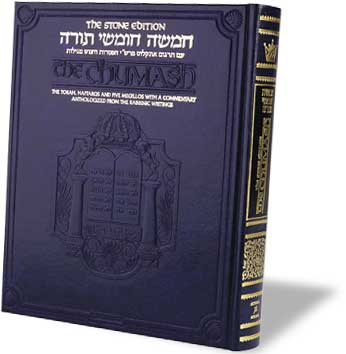
Chumash
Explore the text.
While I strongly advise joining a Torah study group, I have also found that there are passages that I just need to look into more closely. I'll read through the passage myself, jotting down my questions as I go. I bring my questions with me to the next Torah study group. Or sometimes I just ask my rabbi. If you don't own your own chumash, try to purchase one for your personal use. On the "Jewish Toolbox" page of this blog site I offer suggestions of some excellent chumashim that will become a valuable resource for your personal adventures in Torah study. Try starting with looking over the weekly parshah. (You will find it listed on the "Jewish Calendar" page of this blog site.) Read through it and note any questions that you have. Many synagogues have printed guides or Torah discussions as part of their regular Shabbat service. I have also included some links to on-line Torah study resources below.

However you choose to begin, make the commitment to start this year on Shavuot to study Torah regularly. I know you will find, as I have, that you will be generously rewarded for the effort. Hag sameach! (Happy Holiday!)


Related Links:
Shavuot (Union for Reform Judaism)
Laws and Customs of Shavuot (Chabad)
Weekly Parshah
Learning Hebrew on Shavuot ("Judaism 101")
"Torah Sparks" (Conservative)
Learning Torah (Reform)