Rules of the Road

I hope you will find my blog interesting and inspiring. To help make your visit more profitable, please observe these Rules of the Road.

1. I am not a rabbi. If you have a question regarding halachah (Jewish law) please consult a rabbi.

2. Please do not visit on Shabbat or Jewish holidays.

3. Feel free to comment on any post. Please be respectful when commenting. All comments will be reviewed.

4. Additional resources are listed at the end of each post for readers who would like more information on the topic.

5. Please explore the other pages of this blog to learn about the basics of living a Jewish life and to find out more about me and my projects.

6. You may contact me via email at welshabba@gmail.com or leave a text or voice message at 267-225-8573.

Showing posts with label Learning Torah. Show all posts

Monday, May 18, 2020

More Than Cheesecake! The Meaning of Shavuot

A few years ago in a conversation with a local rabbi I got a sad reality check. "Shavuot is probably the least observed of all Jewish holidays. I was shocked! But the more we talked, the more I had to agree with him. Synagogue attendance is much lower than on the High Holidays. There is no "home friendly" ritual like lighting the Hanukkah menorah. And in the United States Shavuot has the unfortunate distinction of occurring near the American Memorial Day holiday. Many American Jews prefer to picnic instead of sitting in synagogue celebrating a holiday that they really don't understand.

Bringing Our "First Fruits"


Sadly those of us who"skip" Shavuot miss one of the most meaningful of all Jewish holidays. In Temple times Shavuot was identified with the Festival of First Fruits. The early benefits of the spring harvest were packaged ornately and ceremoniously brought into the Temple in Jerusalem. The great theme of First Fruits was thankfulness and rejoicing. As I write this entry we are still trying to recover from the Coronavirus pandemic. Many of us are still required to stay home except for essential travel. In some areas there are still shortages of some foods and other essentials. Yet there is still cause for us to be grateful! We can be grateful that we still have life. We should be grateful for the diligence of the front line workers who make life not only possible but bearable. All of these and many more blessings are ours because of God's grace. God gives us knowledge and wisdom. Food, medicines, even their air that we breathe are available because He is the Creator! As we prepare for Shavuot this year, let us take time to express our gratitude to God for His extravagant goodness.


Receiving the Torah

Shavuot commemorates our receiving of the Torah at Mount Sinai. Torah is more that just a scroll to be set in a place of honor like some ritual icon. Certainly it is not a book to be left on a shelf to collect dust! Torah is central to Jewish life. It is our guide to righteous living, a treasure trove of wisdom by which we become the people God intends us to be. Torah study is not a mere academic exercise. It is the vital tool by which we learn and do God's will. One of the traditions of Shavuot is all-night Torah study, known as Tikkun Leil Shavuot. This is not to be thought of  as a one time event, like a student "cramming" for a final exam. Rather it is an expression of our love for Torah and our commitment to learn and live its way. Even though we will be celebrating alone at home this year, let us renew our commitment to "learn and to do" as the Torah teaches. Take time to learn Torah regularly, especially on Shavuot.

Chag Sameach!

Related links:

Thursday, June 9, 2016

You Can Do It!

A few days ago I was privileged to listen to a short d'var Torah by a local Chabad rabbi. He cited an interesting comment from one of our sources. When our people stood at Sinai to receive the Torah, we already knew what Hashem expected of us. We knew about kashrut, tefilin, all of that. When G-d gave us the written Torah we also received that ability to do it. We gained the strength, the wisdom, the power to do the will of Hashem. That was a most enlightening thought for me.

Many times it see it seems that we will never be able to "do it all." After all there are 613 mitzvot, each with numerous details. We need to apply them to the unique life situations that we each face individually. For example the prospect of "keeping kosher" can be daunting: two sets of dishes (at least!), two sets of utensils, pots and pans. Then we must look for a reliable hechsher (kosher symbol). And that is just the beginning! For even the most courageous among us learning how to perform all the requirements of living as a Jew can threaten to overwhelm us. I have met some people who just give up. "It's just too much. Too difficult to do it all."

I have a few suggestions for anyone who might be frightened by the sheer size of the commitment. The task may be challenging, but it can be done.

1. Don't try to eat the cheesecake in one bite.

Think of the most observant people you have ever met. Do you think that they arrived at that level of observance in one step? Didn't happen that way. They very likely began learning in cheder or religious school. They learned more as they grew and practiced. It seems to come to them so easily because they have had years of learning and practice. If you are just beginning your Jewish journey, realize that you have years of learning and discovery ahead of you. You wouldn't try to eat an entire cheesecake in one bite, would you? Slow down. Take it one step at a time and you will make steady progress.

2. Keep Calm and learn Torah.

Relax. Don't let yourself get stressed out. Yiddishkeit can be enjoyable if you simply approach life with a positive attitude. Spend regular time learning Torah. Get to know your local rabbi and consult him often. Practice, practice again and then practice some more. Mitzvot become a part of you when you perform them regularly. Enjoy life. We celebrate holidays not endure them. When you (or your significant other) light candles this Yom Tov and Shabbos, take a few minutes just to ponder the beauty of the day. Absorb the holiness of our sacred times. Your journey will become a thing of joyful anticipation. And you might just find yourself a lot less stressed!

3. Remember: You Are Not Alone

Torah is all about building relationships. Hashem didn't give us the Torah and then abandon us to the whims of our own conscience. G-d is with us to strengthen and encourage us. Make sure you daven (pray) daily. If at all possible join a minyan. Praying with a community is a wonderful source of strength and encouragement. You will very likely find someone who has been through the same struggles as you and has succeeded. Of course include your family and loved ones in your life and learning. Families that build bonds around a Torah lifestyle find that their relationships grow stronger and closer than ever.

You have the power and ability to become what Hashem desires that you become. "The journey of a thousand miles begins with a single step." Take life one step at a time. Travel with your loved ones and your Jewish community around you. I am confident that you will make progress toward your goal and enjoy doing it.

To you and yours, a Joyous Shavuot.

Related links:

Friday, July 31, 2015

Tanach 101: Getting to Know the Jewish Bible

May Grandfather would occasionally play a little trick on some of his friends. He would ask them to quote the biblical verse from Hezekiah 3: 16. When his friend would rush to grab a Tanach and search for the reference, Grandpa would start to chuckle. "There is no book of Hezekiah in the Bible," he would explain. Everyone would share a good-natured laugh. Usually he would then invite them to study with him.

So many Jews that I have met know very little about the Jewish Bible. Some don't even know what constitutes the whole of the Jewish sacred text. Others are vaguely aware that there are Psalms and Prophets but have very little idea what the message of these texts might be. Let's take a brief look at what is contained in the "Jewish Bible."

Out with the 'Old.'

First of all, remove the title "Old Testament" from your vocabulary. The Hebrew Scriptures were designated the "Old Testament" or "Old Covenant" by the Christian Church to distinguish these writings from the so called "New Testament," which are the Christian scriptures. As Jews we know that there is nothing "Old" about our covenant with Hashem! It is the same covenant that G-d made with our father Avraham and is still very much relevant to us as 21st century Jews.

The correct term used to identify the Jewish Bible is the Hebrew word Tanach. Tanach is derived from the three words that identify the major sections of the Bible: Torah, Nevi'im (Prophets) , and Ketuvim (Writings).

What's in a Name?

What is contained in each of these sections of the Tanach?

Torah

Most of us are familiar with this section. Torah refers to the five books of Moses, which are Bereshit (Genesis), Shemot (Exodus), Vayikra (Leviticus), Bamidbar (Numbers), and Devarim (Deuteronomy). A portion of these books are read on each Shabbat morning and during Monday and Thursday morning minyanim.

Nevi'im

Nevi'im means Prophets and refers to Books containing messages from the great teachers of the Prophetic Era as well as historical references to the Hebrew nation after the death of Moses. In the English translation of the Tanach these books are referred to by the names of their authors or principal characters: Joshua, Judges, Samuel (I & II), Kings (I & II), Isaiah, Jeremiah, Ezekiel, The Twelve ( a collection of smaller books from the prophets Hosea, Joel, Amos, Obadiah, Jonah Micah, Nahum, Habbakkuk, Zephaniah, Haggai, Zechariah, and Malachi).

Ketuvim

Ketuvim (Writings) refers to historical and poetic books that are considered part of the Sacred Text. This section includes: Psalms (Tehillim), Proverbs, Job, Song of Song (Shir Ha'shirim), Ruth, Lamentations (Eichah), Ecclesiastes (Kohelet), Esther, Daniel, Ezra & Nehemiah (considered one book), the Chronicles.

A Valuable Resource

The Tanach is a valuable resource of instruction, inspiration, and knowledge. It is unfortunate that so many Jews do not take advantage of this fountain of wisdom. Read from each sections. Many have the tradition of reading the entire book of Psalms, either each week or each month. Esther is read on Purim; Eichah on Tisha B'Av. Portions from the Prophets are recited on Shabbat. Determine to read each and every book as time allows. You will find it well worth your while. Study these books as well. Many synagogues, schools and individual rabbis offer classes that review and expound the message of each book

Don't let the Tanach be a closed book! Make the teachings and inspiration of our tradition become a guide to your life.

Related links:

Sunday, May 17, 2015

"We Will Do and We Will Listen"

Soon we will celebrate the holiday of Shavuot (also referred to as the Feast of Weeks and Pentecost). That is, some of us will celebrate it. Shavuot has the unfortunate distinction of being the least observed of all Jewish holidays. That is a very sad situation since Shavuot commemorates the giving of the Torah at Mount Sinai. What could be a more important and meaningful observance than recalling the giving of the Torah?

When our ancestors stood at the foot of Sinai, they had no such reluctance. As Moses read the law in their presence, they responded with one voice, "All that Hashem has said we will do and we will listen!" (Exodus 24: 7) Their response seems to defy logic. Why would they say, "We will do," before they had listened to what Hashem would say? It would seem the wiser course would have been to listen, study, evaluate and then decide. Our rabbis and sages have commented of this strange verse for centuries. While I make no claim to being a "sage," I share with you a few thoughts below.

Begin with trust.

One of my teachers once said, "We accept the authority of Torah out of loyalty to Hashem." This is not blind loyalty. G-d forbid. Our ancestors experienced the trustworthiness of Hashem personally. Despite their fears and misgivings they were delivered from Pharaoh's army at the Sea of Reeds, been provided with sustenance throughout their journey to Sinai, saw the pillar of cloud by day and the pillar of fire at night. Only a people who had learned to trust G-d completely would dare to declare obedience so completely.


Listen and Learn.

One cannot expect to do things properly unless one is willing to study, learn and practice. Our ancestors did not say, "We will do," and not pledge to listen and learn. When my father asked me to help him with some project around the house, I usually responded positively. I knew that to accomplish whatever Dad wanted me to do, he would teach me the necessary skills that I might lack. "I will do and I will listen." I promised to do what he asked of me and then agreed to learn. It is not enough to blindly charge ahead without being willing to learn. Study and practice are needed to accomplish G-d's will. On the first night of Shavuot, it is customary in many communities to spend the night studying Torah. In some communities this study literally goes on all night. (Tikkun Leil Shavuot)

Renew the Covenant

On Shavuot it is customary to read the Book of Ruth. Some people think of the Book of Ruth as a love story. In a sense it is, but not the shallow romance that passes for "love" these days. Ruth expressed her love for Naomi, for her people, for Hashem not with sentiment but with commitment. "Where you go, I will go; where you lodge, I will lodge. Your people will be my people, and your G-d, my G-d. Where you die, I will die and there will I be buried." Ruth's famous declaration is profound and strong. For those of us who have come to Judaism through the door of conversion, it has a special meaning, for this is the very commitment which we made when entering into the Covenant. Shavuot is a time for all of us - born Jew and new Jew alike - to reaffirm our commitment to Hashem, to Torah, to our people. Not in sentiment alone, but in a deep, personal determination to live, learn and demonstrate Torah every day.

Torah brings us closer to each other and to G-d. May we find the blessings of community and covenant in this "Season of the Giving of the Torah."

Related links:

Wednesday, December 3, 2014

Living Freedom

In just two weeks we will celebrate Hanukkah the holiday which commemorates the victory of the Maccabees over the Syrian-Greeks and the cleansing of our Holy Temple. It is a time to rejoice in our victory, to celebrate the freedom that we have to worship as G-d commands.

To many people who have little or no knowledge of Torah, the Torah lifestyle seems to be anything but free. They point to the mitzvot as if they were intended to keep us from enjoying life. When we follow Torah, we cannot eat whatever we choose. We live life on a "schedule." We must pray at certain times, light candles by a specified hour, refrain from our usual activities on Shabbos or Yom Tov. To a person who approaches this life for the first time, it seems so regulated that there is no time to be human! The natural reaction is to rebel against the very idea of mitzvot, to follow what "everyone else" seems to be doing. Their motto seems to be: "I'll do what I want when I want to do it!" But is that freedom?

A wise man once said, "True freedom is not absolute. True freedom is submission to the Truth." One cannot claim to be free from the Law of Gravity and fly without wings. It is impossible. Think of any favorite activity that you enjoy. There are rules! Any sport - football, basketball, golf -  have rules. When preparing a meal the cook must set the stove at the proper temperature or the food will burn. If the gardener does not ensure the proper amount of rain and sunshine for his plants, they will die.

Likewise Hashem has given us mitzvot to enable us to enjoy the blessings of freedom. When we learn Torah and follow its teachings, we experience how liberating life can be. Our relationships with our loved ones and friends are enriched. Our physical health, our business lives, every aspect of human existence is elevated to a level of holiness. We as individuals gain an indescribable sense of satisfaction and peace that comes only from knowing G-d and following His mitzvot. Submission to the Truth of Torah brings true freedom.

Hanukkah
As you light the Hanukkah candles - the lights of freedom - this year, know that by performing mitzvot we discover the deepest meaning of freedom. May you learn and live Torah each day. Celebrate our ability to live life as our Creator intended it to be lived. In freedom!

May you have a bright and blessed Hannukkah.

Related links:
"The Flame"
"The Lightness of Being"
"Chanukah,1942"

Tuesday, September 16, 2014

More Precious the Pearls: Our Living Torah

My grandfather never missed an opportunity to teach a lesson. Even while doing simple, everyday tasks Grampa had a way of imparting wisdom by turning the task into a living parable. One bright summer day some years ago, I was visiting him during a break from my job as counselor at a nearby children's camp. Grampa suddenly said, "David, come with me. We are going downtown." Now my grandparents lived in Carbondale, Pennsylvania, USA. Carbondale is not a large town so as we ran our errands, I was not surprised that many people knew Grampa. He always had time to share a word and a blessing with everyone. When he had finished his regular routine, Grampa made one unexpected final stop - at a jewelry store.

The salesman came from behind the counter and greeted Grampa like an old friend. "Good morning, Mr. Aston. Is this your grandson? How may I help you today?"

After introducing me, Grampa said, "I want to buy a string of pearls."

"Very good," replied the delighted salesman. "Right this way." He led us to a display case. He removed a beautiful string of pure white pearls. He handed them to Grampa and explained, "Look carefully at this necklace. Notice that there is one large pearl at the center. Now Mr. Aston, the pearls that extend up the chain gradually diminish in size until the smallest pearls meet at the clasp. The pearls are carefully selected to match so that the two sides are perfectly symmetrical."

Grampa carefully examined the pearls and ran his fingers over both sides to verify that the salesman had been accurate in his description of the sizing of the pearls. He then handed the string of pearls back to the salesman.

To my great surprise, the salesman through the valuable necklace with all his might against a nearby display case! "I want you to feel these pearls, Mr. Aston," he said as he handed them to my grandfather. "Notice how perfectly smooth they are. If they were artificial or of poor quality, they would feel rough and be pitted and marked. This is how you know that these are genuine, high-quality pearls."

Grampa again ran his fingers over each pearl. Satisfied that this was what he wanted, he said, "Can you gift -wrap them for me please?"

"Absolutely, Mr. Aston." A moment later the salesman returned with a small, beautifully wrapped box. "That will be seventy eight dollars." At that point in time, $78 was quite a lot of money. Grampa paid it without a word.

We returned home and Grampa gave the box to Gramma. "Here Beat," he said. "This is for you." (I should explain: my grandmother's name was Beatrice. Grampa often called her "Beat.")

Gramma opened the package and took the precious gift in her hands. "Oh pearls!!" she exclaimed. "Thank you, Will!" Her face beaming with delight, she turned to me and said, "I love pearls, you know." What a beautiful moment it was!

I know that Grampa was a loving and generous husband, but something about this life lesson seemed strange. Grampa had just spent a princely sum for a necklace, even though this day had no special significance. It wasn't Gramma'a birthday and their wedding anniversary had already passed. And why had he insisted that I go with him? Aside from a loving gesture by a remarkable man, clearly this was one of Gampa's lessons. But I just didn't get it.

It wasn't until years later that I finally understood what Grampa was trying to teach me. Gramma was nearly totally blind. She could not see the flawless white color of the pearls or the perfect symmetry. But she could feel how smooth they were, how expertly matched each pearl was with its mate. By examining the string of pearls hands on she learned the quality and value of this precious gift.

More Precious than Pearls
G-d has given us a gift more precious than pearls: the Holy Torah. As valuable and important as it is to study Torah, to learn fully how perfect, beautiful and lasting the precious gift is Torah must be lived. My rabbi once told me, "Torah was meant to be lived in a real world." Studying Torah is not simply an academic exercise. The values and wisdom we gain are not simply to be stored in our brains until the next class. Gramma learned the great value of the pearls taking them in her hands. Similarly our learning of Torah must also be "hands on." When we perform mitzvot and apply the wisdom of Torah in our lives we become transformed. Those with whom we contact are made better because we create more positive relationships by following Torah teaching. The world is made more perfect because we live according to G-d's plan.

As we prepare for the New Year and search our inner selves, may this be a time when we determine not only to learn Torah but to live Torah. Make a commitment to study Torah regularly and to put into practice the timeless lessons which you will learn. You - and the world - will be much the better for it. And you will know in truth that Torah is more precious than pearls.

May you have a sweet and happy New Year. Shannah Tovah.

Related links:
My Jewish Learning
Daily Torah Study (Chabad)

Tuesday, July 1, 2014

"Tied Up" The Mitzvah of Tefillin

A couple of years ago I was walking on the second floor of a local shopping mall when I saw the strangest sight. Sitting in a lounge area just below me was a college age man wearing tefillin, the black boxes that are sometimes referred to as "phylacteries." While I have seen many men wear tefillin many times under many circumstances, I must say that was the only time I ever saw anyone lay tefillin in a mall!

This memorable event came to mind a few months ago when I was waiting for my car to be repaired. Who should walk into the waiting room but my local rabbi! We exchanged greetings and he asked me, "Have you laid tefillin yet?"

I admitted that I had not. "I had to get my daughter off to school early, then come straight here in order to make my appointment. I'll do it later."

"I brought my tefillin with me. We can do a mitzvah while we are waiting." With that he rabbi opened his attache case and produced a handsome set of tefillin. With  his assistance I donned them and recited the Shema - right there in the waiting room of a local car dealership.

No doubt about it. Tefillin is an unusual ritual. What is it about tying leather boxes to one's arm and forehead that arouses such loyalty among those of us who observe this unique mitzvah?

What are tefillin?

Tefillin are small black boxes with long leather straps attached to them. Jewish males are required to wear them every morning, except for Shabbat and Yom Tov. Within the boxes are hand written scrolls containing four sets of verses from the Torah in which tefillin are commanded. (Exodus 13: 1-10; Exodus 13: 11-16; Deuteronomy 6: 4-9; Deuteronomy 11: 13-21) Laying tefillin is one of the first mitzvot a young boy assumes when he becomes Bar Mitzvah. Very soon after I completed my conversion, I sought out a rabbi to help me obtain a set for myself.

My own tefilin.

Why are tefillin worn?

The Torah commands us not only to take the words of  Torah to heart, but to "bind them as a sign upon you arm and make them frontlets between your eyes." (Deuteronomy 6: 8) In order to fulfill this commandment tefillin are tied to the arm and the head. Tefillin bind us to Torah. Tefillin represent in a tangible way our dedication to and union with G-d. In both thought (the head) and deed (the arm) we commit ourselves to serve Hashem. 

How are tefillin worn?

Tefillin are worn during the morning prayers. The talit is put on first (See "The Truth About the Talit" on this blog.) The arm tefillin (known as "shel yad") is worn before the head tefillin ("shel rosh"). Remove the hand tefillin and unwind the straps. The box is placed on the center of the bicep muscle on the "weaker" arm. (Right handed persons put the tefillin on their left arm; left handed on the right.) The box points inward, toward the heart. The following blessing is recited when the arm tefillin is in place:


The strap is the tightened and wound seven times around the forearm.The excess of the strap is wound around the palm of the hand temporarily.

The head tefillin is then placed so that the box is centered on the top of the head at the hairline not below. The loop of the strap surrounds the crown of the head. The knot centered at the base of the skull above the hairline.The blessing for the head tefillin is recited before the box is placed in position. After securing the head tefillin properly, recite the phrase "Baruch shem..."

The final step is laying the tefillin is to wrap the straps of the arm tefillin around the fingers, a symbol of our spiritual betrothal to G-d. This is done while reciting these verses from Hosea: "I will betroth you to Me forever. And I will betroth you to Me with righteousness, justice, kindness, and mercy. I will betroth you to Me with fidelity, and you shall know God."

There are some variations in custom concerning the laying of tefillin. You should follow the customs of your local congregation.

Many of my friends are reluctant to begin laying tefillin. Even men who regularly perform other mitzvot hesitate to put on tefillin. My personal experience has been a very happy one. When I am wearing my tefillin I feel a genuine closeness to G-d. I often attend a local minyan made up of men from many expressions of Judaism - Orthodox, Reform and Conservative. All of us don tefillin for the morning prayers. There is a special bond between us as we follow the commandment.

Tefillin require a special expertise to be made in a kosher fashion. They are rather expensive, but well worth the investment. Some congregations have extra sets of tefillin for men who do not have their own. There are even some groups who offer financial assistance to anyone who is sincere about performing this important mitzvah. Speak to your local rabbi. Don't be shy! You will soon experience the benefits of being "tied up" in the morning!

Tefillin photo by Dovid J. Aston.

Related links:

Thursday, May 22, 2014

The Truth About the Talit

I have commented many times on how much our Christian friends seem to envy us. Not only do they enjoy our food, some actually keep kosher! Others build sukkot, hold Passover sederim, join in Hanukkah candle lighting festivities, etc. All these activities of course are given a Christian re-interpretation. It is interesting - and sometimes amusing - to learn what symbolism they give to our holidays and customs.

Recently a popular Christian pastor, whose services are broadcast around the world from his church in the United States, taught his congregation about the "mystery of the prayer shawl." The "prayer shawl" to which he referred was the talit. I must commend him for doing his homework! Much of what he had to say concerning the talit was quite correct. Unfortunately he made some assumptions that led him to some conclusions that were not accurate. I don't believe he had any intention to be deceptive. This pastor is well taught and a good friend of the Jewish people and the nation of Israel. He simply needed to consult his local rabbi!

There is no "mystery" to the mitzvah of wearing the talit. In this post I'll share the truth about the talit. What is it? Why is it worn? What is its purpose and meaning? Hopefully it will inspire you, my dear readers and friends, to "go forth and learn" more.

What is a talit?

A talit is a four-cornered garment that has four long fringes (tzitzit in Hebrew). There are basically three styles commonly seen in Jewish congregations. The traditional talit (also pronounced talis) is a large rectangular garment that covers the shoulders and nearly touches the floor. A smaller type is also frequently used that covers the shoulders and most of the back. The third type is called a talit katan, or "small talit." This talit is also rectangular and has a opening through which the wearer places his head. Unlike the other two types, this talit is worn under one's shirt. The talit katan is worn all day while the larger talit is worn only during morning prayers. (See the "Jewish Toolbox" page of this blog.) Any fringes on the garment other than the tzitzit are simply for decoration and have no ritual significance at all.

You may occasionally see a talit that has been modified in some way for the convenience of the wearer. I have even seen one with a zipper added so the person wore it like a coat! These may be interesting modifications but they are definitely not kosher and do not satisfy the mitzvah of wearing a talit.

A traditional talit.

Why is the talit worn?

In the Torah (Numbers 15:37-41) G-d commands the "people of Israel that in every generation they shall put tzitzit on the corners of their garments and bind a thread of blue to the tzitzit of every corner." The purpose is made clear: "You shall look upon these tzitzit and be reminded of all the mitzvot (commandments) of the L-rd to fulfill them, and not be..led astray." By wearing the tzitzit and following the prescribed ritual, we have a visual representation of the commandments of Hashem and an incentive to follow them and lead godly lives.

What is the meaning of the talit?

The talit is a visual representation of the biblical commandments (mitzvot). Our rabbis and sages have determined the precise requirements (halachah) in order to fulfill the important commandment.

The tzitzit must be placed on the corners of the garment. Therefore the garment must be rectangular. The commandment to place a blue thread has been set aside because the source of the proper dye color is now extinct. (There has recently been some effort to renew the placing of the blue thread in the tzitzit, but there is not general agreement on whether the new-found dye sources are kosher or not. Check with your local rabbi for guidance.) The tzitzit are tied to the corners of the talit in a prescribed manner so that the number of knots brings the total of elements of the tzitzit to 613 -  the number of commandments in the Torah. Therefore the tzitzit remind us of "all the mitzvot of the L-rd" as we look upon them.

Whenever the Torah commands us to "look" or "see," the rabbis understand this to mean that the mitzvah must be observed during the natural light of day. Therefore the talit is worn during shacharit, the morning prayer service. Since it is a time bound commandment women are traditionally exempt from its observance. (In some more liberal communities, women have been permitted to wear the talit. Here again, I recommend that you speak to you local rabbi to learn more about the requirements of wearing the talit.)

How is the talit worn?

Prior to beginning the morning prayers, hold the talit in front of you. There is a decoration on one of the edges of the talit. (Often this will have the Hebrew blessing over the talit printed on it.) Hold this decoration facing you and recite the appropriate blessing. (See the link below. Courtesy: Congregation Shaare Emeth, St. Louis, Missouri, USA) Flip the talit around so that it covers your shoulders. If you are wearing a full-length talit, fold the corners over your shoulder so that the tzitzit do not touch the ground. The first time that you don the talit, it is a good idea to have someone assist you in performing it properly. During the recitation of the Sh'ma you will hold the tzitzit in your hand. When you recite that paragraph containing the commandment of tzitzit, it is proper to kiss the tzitzit whenever the word is spoken.Your rabbi will be happy to show you when and how this is done.

It is not surprising that so many seekers after truth have discovered the value of the talit. Surrounded by a visual reminder of the mitzvot of Hashem, one is drawn closer to G-d's presence. This is a simple but powerful mitzvah. It is uniquely, and specifically ours. May you find blessing and fulfillment in the wearing of the talit.

Photo credit: Courtesy of Dovid J. Aston

Related links:

Friday, May 17, 2013

"Teach Them to Your Children"

One of the most challenging responsibilities for any Jewish parent is transmitting the Tradition to his or her children. The task often seems even more daunting when one is still new to Jewish observance himself. So many questions crowd into the mind: How can I teach what I don't fully understand myself? What if my children really don't want to learn Torah? How can I make Jewish values and rituals relevant to my children? These questions and more make some parents reluctant to start. Too many parents simply delegate the task of teaching Judaism to the local synagogue. Far too often, when Bar/Bat Mitzvah class ends so does the child's Jewish observance!

I remember how intimidated I  felt when I first began my Jewish journey. Fortunately I quickly discovered that sharing Torah with my children was not "mission impossible!" In this post I will share some tips that I have learned "Along the Way." I hope they will inspire you to begin or to carry on!

You have already started!

As I have reminded parents on many occasions, we are all teachers. Your children see what you do and hear what you say. They interact with you in countless ways.Your children learn quickly what you consider important in your life. When you light Shabbat candles, observe Chanukah, attend synagogue services, or perform mitzvot, you are teaching your children that these are things that matter. That in itself is a very important lesson.

Children want to learn.

They may not admit it, but your children want to learn. They are looking for meaning and purpose in life. Even when they seem to be rebelling, it is because they are frustrated at not understanding or not having found an answer. Don't give up! Be positive, be enthusiastic, and most importantly be consistent. If you are there for them eventually they will come to you.

Brit Milah

Start sharing now.

A parent once asked me, "When should I start my child's Jewish education?"

"How old is your child?" I asked.

"Seven years old."

I smiled and said, "You are about seven years too late!"

Seriously, my wife and I took our children with us everywhere we went even as infants. They learned not only that there is a Jewish way to light candles and to pray, but there is a Jewish way to attend a baseball game and go shopping. When children grow up with Jewish values and Jewish observance, they are learning to be Jewish.

Learn with your children.

Don't be concerned that you "don't know it all." No one does! As you study, learn and practice, share what you learn with your children. Learning and growing together will build a lasting bond between you and your children that is built on Jewish values and mitzvot. My son is now 34 years of age and we still learn and study together.

Synagogue school and Jewish day school are both valuable resources, but there is no substitute for the parent-child relationship for lasting learning. To build a strong relationship and insure the transmission of the Tradition to the next generation, the task of teaching our children diligently falls to us parents. Give it your best effort. "If you raise a window the tiniest bit, Hashem will fling open the door!"

Related links:
Learning Resources (URJ)
My Jewish Learning (website)
Jewish Living and Learning (USCJ)

Sunday, May 20, 2012

Celebrating Torah

Shavuot (the Festival of Weeks, also known by some people as Pentecost) celebrates the day that the Jews stood at Mount Sinai and received the Torah from G-d. This monumental event is one of the defining moments in our history. Sadly it is often one of the least observed of all Jewish holidays, probably because there is no dramatic, public tradition as there is for other special Jewish days. We don't blow the shofar; there is no Shavuot "seder" (as on Passover); no one has to ask us why we are building a sukkah.The greatest tradition associated with this holiday may also be the most important of all - studying Torah.

Studying Torah isn't usually the first mitzvah that a person thinks of when deciding to become more observant, but it may be the most important and ultimately the most practical. Here are a few suggestions to help you get started.

Our Family Torah
Start now.
There is a custom on Shavuot of studying Torah late at night (Tikkun Leil Shavuot). While this may require the loss of a couple of hours of sleep, tikkun leil Shavuot is actually a great way to get to know other Jews who are interested in and committed to studying Torah.  The portions selected for study are very often "user friendly" and the rabbi (or other instructor) will be happy to answer your questions. This age-old custom may provide just the incentive you need to get started.

Don't do it alone!
I have found that there is just no substitute for studying Torah in a group setting. A knowledgeable teacher is an indispensable guide to finding your way through the sometimes confusing passages of our Sacred Text. You will also make new friends who will help you become more comfortable with learning Torah. One excellent place to start looking for a Torah Study Group is at your local synagogue. My shul sponsors a monthly Torah study lunch which is very relaxed and was where I began my trek into Torah. It has become one of our favorite family events (especially for my youngest!). (If you live in suburban Philadelphia, click here and I will send you the date of the next Torah Study Lunch.) Many communities offer courses to the Jewish public, sometimes for a nominal fee. Check with your local synagogue for group Torah Study resources in your area.

Chumash
Explore the text.
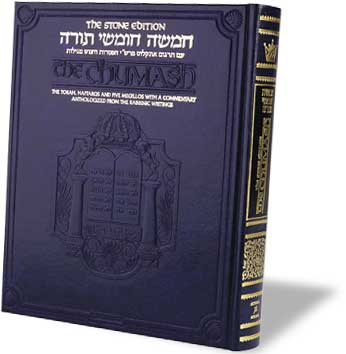
While I strongly advise joining a Torah study group, I have also found that there are passages that I just need to look into more closely. I'll read through the passage myself, jotting down my questions as I go. I bring my questions with me to the next Torah study group. Or sometimes I just ask my rabbi. If you don't own your own chumash, try to purchase one for your personal use. On the "Jewish Toolbox" page of this blog site I offer suggestions of some excellent chumashim that will become a valuable resource for your personal adventures in Torah study. Try starting with looking over the weekly parshah. (You will find it listed on the "Jewish Calendar" page of this blog site.) Read through it and note any questions that you have. Many synagogues have printed guides or Torah discussions as part of their regular Shabbat service. I have also included some links to on-line Torah study resources below.

However you choose to begin, make the commitment to start this year on Shavuot to study Torah regularly. I know you will find, as I have, that you will be generously rewarded for the effort. Hag sameach! (Happy Holiday!)


Related Links:
Shavuot (Union for Reform Judaism)
Laws and Customs of Shavuot (Chabad)
Weekly Parshah
Learning Hebrew on Shavuot ("Judaism 101")
"Torah Sparks" (Conservative)
Learning Torah (Reform)